Loading...

Find the Right Solution for Your Family

There's no single "best" option—just the one that fits your situation. Here's how they compare.

Honest Comparisons, No Hard Sell

We believe in helping you find what actually works for your family—even if that's not us.

The market for senior safety solutions has grown significantly, and that's a good thing. It means more options for different situations, needs, and preferences. But it can also be confusing. Here's our straightforward take on the main categories and where Nanavia fits.

Quick Comparison

Feature Medical Alert
Devices
Comprehensive
Monitoring
Nanavia
Must be worn? Yes No No
Camera or audio? No Sometimes Never
Fall detection? Some models Some systems No
Emergency button? Yes Sometimes No
24/7 call center? Yes Some systems No
Professional install? Usually no Often yes No
Number of devices 1 (worn) Multiple rooms 1 (placed)
Alerts who? Call center → 911 Varies Your chosen circle
Best for Existing conditions Cognitive decline Active independents
Typical monthly cost $25-50+ $100-300+ TBD
Category 1

Medical Alert Bracelets & Necklaces

The familiar "I've fallen and I can't get up" solution.

These wearable devices have been around for decades and serve an important purpose. Press a button, and you're connected to a 24/7 monitoring center that can dispatch help or contact emergency services on your behalf.

Modern versions often include fall detection, GPS tracking (for mobile units), and two-way communication. They're a proven technology backed by established response networks.
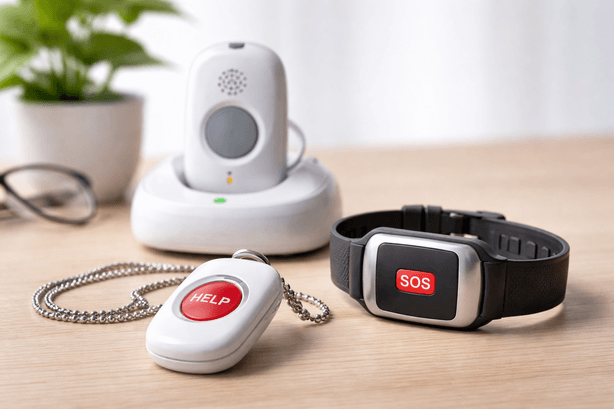
Medical alert pendant and bracelet
Strengths
  • Immediate access to professional help
  • Fall detection available on some models
  • GPS tracking on mobile versions
  • Established, proven technology
  • No cameras or home monitoring
Considerations
  • Only works if worn—many people take them off
  • Can feel stigmatizing ("makes me feel old")
  • Requires charging or battery replacement
  • Monthly monitoring fees required
  • Falls in shower? Necklace often removed
Best for: People with existing medical conditions, history of falls, or those who live alone and are comfortable wearing a device consistently. Ideal when immediate professional response is a priority.
Category 2

Comprehensive Smart Home Monitoring

Multiple sensors throughout the home tracking behaviors and patterns.

These systems place sensors on doors, in multiple rooms, on appliances, and sometimes include cameras. They build a detailed picture of daily routines and can detect anomalies like wandering at night, leaving the stove on, or unusual bathroom visit patterns.

Some systems include AI analysis, caregiver dashboards, and integration with healthcare providers. They're sophisticated tools for families dealing with cognitive decline or multiple health concerns.
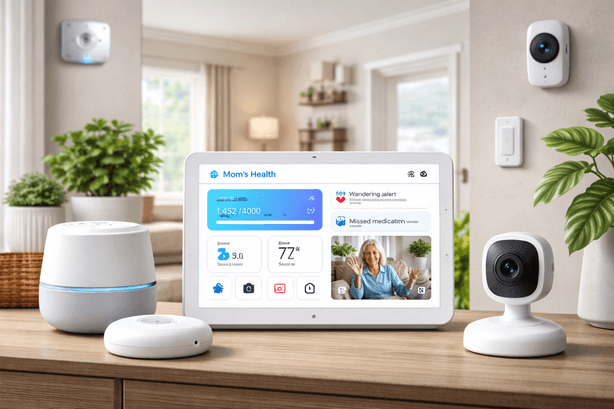
Smart home with multiple sensors
Strengths
  • Comprehensive home coverage
  • Can detect wandering and confusion
  • Detailed activity and behavior insights
  • Good for early dementia monitoring
  • Nothing to wear or remember
Considerations
  • Can feel invasive—sensors throughout the home
  • Often requires professional installation
  • Higher cost (equipment + monthly fees)
  • May include cameras the person doesn't want
  • Can create data overload for families
Best for: Families dealing with early-stage dementia, Alzheimer's, or significant cognitive decline. Helpful when detailed behavior tracking is needed to identify changes that might indicate worsening conditions.
Nanavia

Passive Activity Monitoring

A single motion sensor that notices when daily patterns break.

Nanavia takes a minimalist approach. One sensor in a high-traffic room learns when there's usually activity. If there's an unusual gap—like no movement in the kitchen after 10am when there's always movement by 7—your chosen contacts get a text alert.

It's not trying to track everything or provide emergency response. It's simply a way to notice when something seems off, so family can check in. A digital safety net that respects independence and privacy.
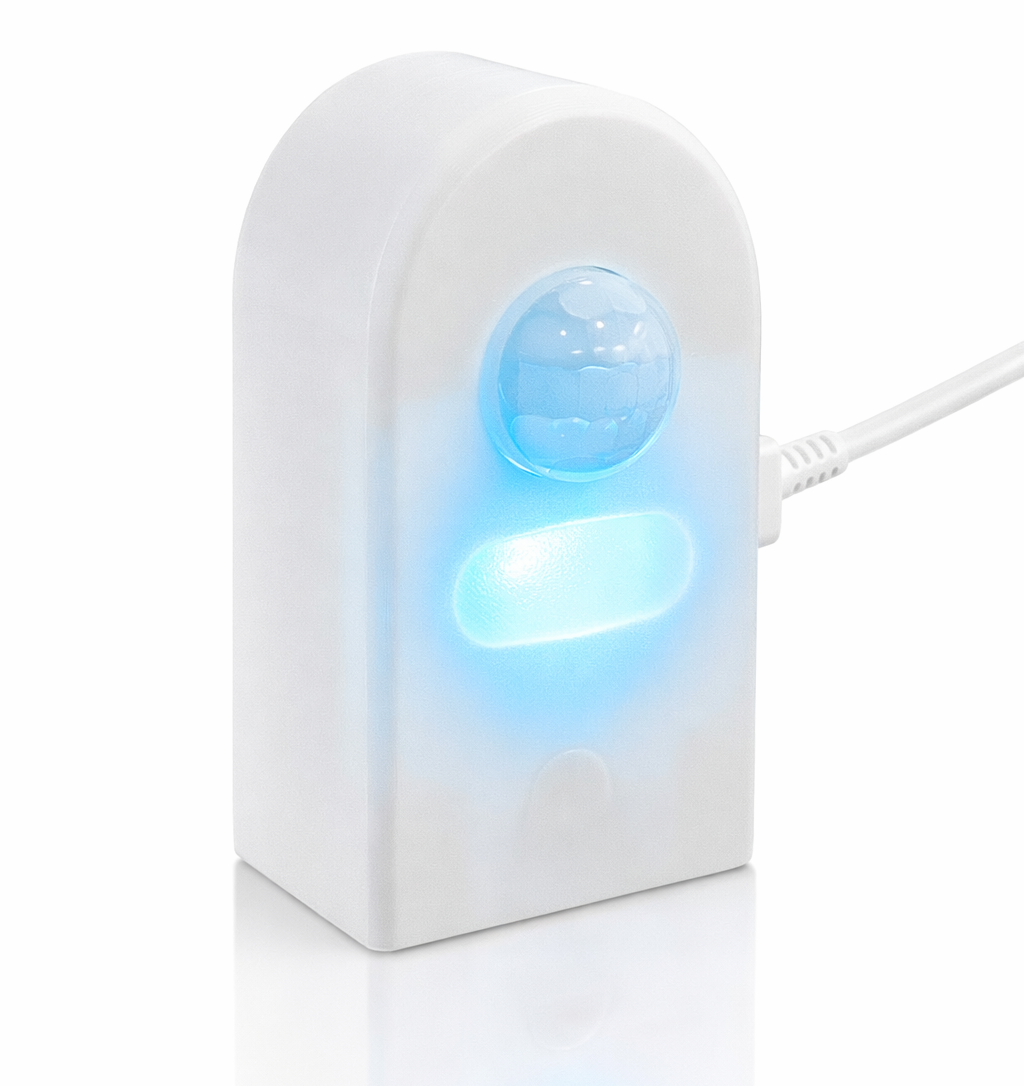
Nanavia motion sensor device
Strengths
  • No cameras, no audio—ever
  • Nothing to wear or remember
  • Simple DIY setup, no technician needed
  • Respects privacy and independence
  • Alerts your personal network, not a call center
  • Pairs well with other solutions as a backup layer
Considerations
  • Not emergency response—alerts family, not 911
  • No fall detection
  • Single room coverage only
  • Requires family/friends who can respond
  • Works best with consistent daily routines
  • Not suited for cognitive decline monitoring
Best for: Active, independent adults who refuse to wear medical alert jewelry but acknowledge they could use a safety net. Families who want peace of mind without being intrusive. Those who already have other systems but want an additional layer of passive monitoring.

Which Solution Is Right for You?

Here's a quick guide based on common situations:

"They have a heart condition"

Medical alert devices are probably the right choice. Immediate access to professional help is critical when there's an existing condition that could cause sudden emergencies.

→ Medical Alert Device
"Memory is becoming a concern"

Comprehensive monitoring systems can track patterns throughout the home and detect early signs of cognitive decline like wandering or forgetting to eat.

→ Comprehensive Monitoring
"They refuse to wear anything"

If they're healthy and independent but won't wear a device, Nanavia might be a good fit. It provides a layer of visibility without requiring them to do anything differently.

→ Nanavia
"We want an extra layer of safety"

Maybe they already have a medical alert but don't always wear it, or you just want additional visibility. Nanavia pairs well as a supplemental system.

→ Nanavia (as backup)

The Nanavia Philosophy

We're not trying to be everything to everyone. We built a focused tool for a specific need.

Some families need immediate emergency response. Others need comprehensive cognitive monitoring. And some families have a parent who's doing just fine—active, sharp, independent—but they worry about the "what if" scenarios. What if mom slips in the bath? What if dad has a health event in the middle of the night?

Nanavia is for that third group. A light touch. A backup plan. A way to know that if something goes wrong and they can't call for help themselves, at least someone will notice.

It's peace of mind for you. Independence preserved for them.

Think Nanavia Might Be Right for Your Family?

Learn more about how it works, or join our waitlist to be notified when we're ready.