
For active adults who want to live on their own terms—and the families who want to support that.
She's independent, active, and has no intention of slowing down. But you still worry.
Nanavia was designed for adults who live alone and want to keep it that way. People who garden, travel, meet friends for lunch, and don't see themselves as needing help. They're not sick. They don't have a condition that requires constant monitoring.
But they're also realistic. They know that accidents happen. The fear isn't about illness—it's about being alone when something unexpected happens and having no one know for hours or even days.
That's where Nanavia comes in. A quiet backup plan that respects independence while providing a safety net.
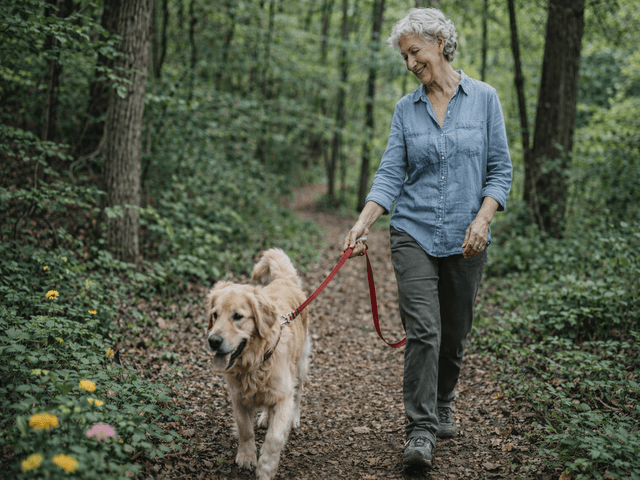
Remember when neighbors looked out for each other?
In today's world, families are often spread across cities or even countries. Nanavia bridges that distance, providing the comfort of knowing someone is watching over your loved one—without the intrusion of constant check-ins or visual surveillance.
Think of us as the thoughtful neighbor who notices when the morning paper hasn't been picked up, or when lights haven't turned on at the usual time. We provide that gentle oversight that lets extended family breathe easier, knowing they'll be alerted if something seems off.
It's peace of mind for you, and preserved independence for them.
We hear it all the time. And honestly? We get it.
Medical alert bracelets and necklaces are great—if you wear them. But many people don't. They take them off to shower, forget to put them back on, or simply refuse because it makes them feel old or dependent. A solution that only works when worn isn't much of a solution for someone who doesn't want to wear it.
Camera systems feel invasive. Nobody wants their adult child watching them eat breakfast or take a nap. And comprehensive monitoring systems with sensors in every room can feel excessive—like being constantly observed. Nanavia takes a different approach: one sensor, one room, no cameras.
Our purpose is simple: let you set the rules of when you want to be alerted. What happens next is up to you—maybe a quick call, maybe a visit. We give you the information. You decide how to act on it.
We'd rather point you to a better solution than sell you something that doesn't meet your needs.
If your loved one has a heart condition, history of strokes, severe diabetes, or another condition that could cause sudden emergencies, a medical alert system with 24/7 monitoring and fall detection is likely a better choice. Those systems can dispatch help immediately.
For early-stage dementia or significant cognitive decline, comprehensive smart home systems that monitor multiple rooms and behaviors may be more appropriate. They can detect wandering, unusual patterns throughout the house, and other early warning signs.
If you need guaranteed response times and professional dispatch, Nanavia isn't the right tool. We notify your personal network—family and friends—not emergency services. The response depends entirely on who you've chosen as contacts.
Nanavia works best when there are consistent daily patterns to learn from. If your loved one travels frequently, has a very irregular schedule, or spends most of their time outside the home, the activity baseline might not be reliable enough to be useful.
Not sure which solution is right for your situation?
Compare Your OptionsHere's who we built this for:
Mom is 78. She lives alone in the house where you grew up. She's healthy, sharp, and fiercely independent. She walks the neighborhood every morning, volunteers at the library on Tuesdays, and has lunch with friends on Fridays.
You live three states away. You call a few times a week, but you can't help wondering: what if something happens between calls?
She's not interested in wearing a necklace—"those are for old people," she says. And she definitely doesn't want cameras in her house. But she understands your concern and is willing to plug in a small device in the kitchen.
That's Nanavia. A simple way to know she's up and moving, without changing how she lives. And if one morning the sensor notices she hasn't been in the kitchen by 10am, you get a text. Probably she just went to breakfast with a friend. But at least you'll know to check.
Nanavia isn't trying to replace everything—it's designed to complement what you're already doing.
If your loved one already has a medical alert device they wear when they remember, Nanavia adds a backup layer that doesn't depend on them remembering. If they have a Ring doorbell or security system, Nanavia focuses specifically on indoor activity patterns rather than arrivals and departures.
Think of it as one thoughtful layer in a broader support system—working quietly in the background, just in case.
See how Nanavia works, or explore how we compare to other solutions on the market.